
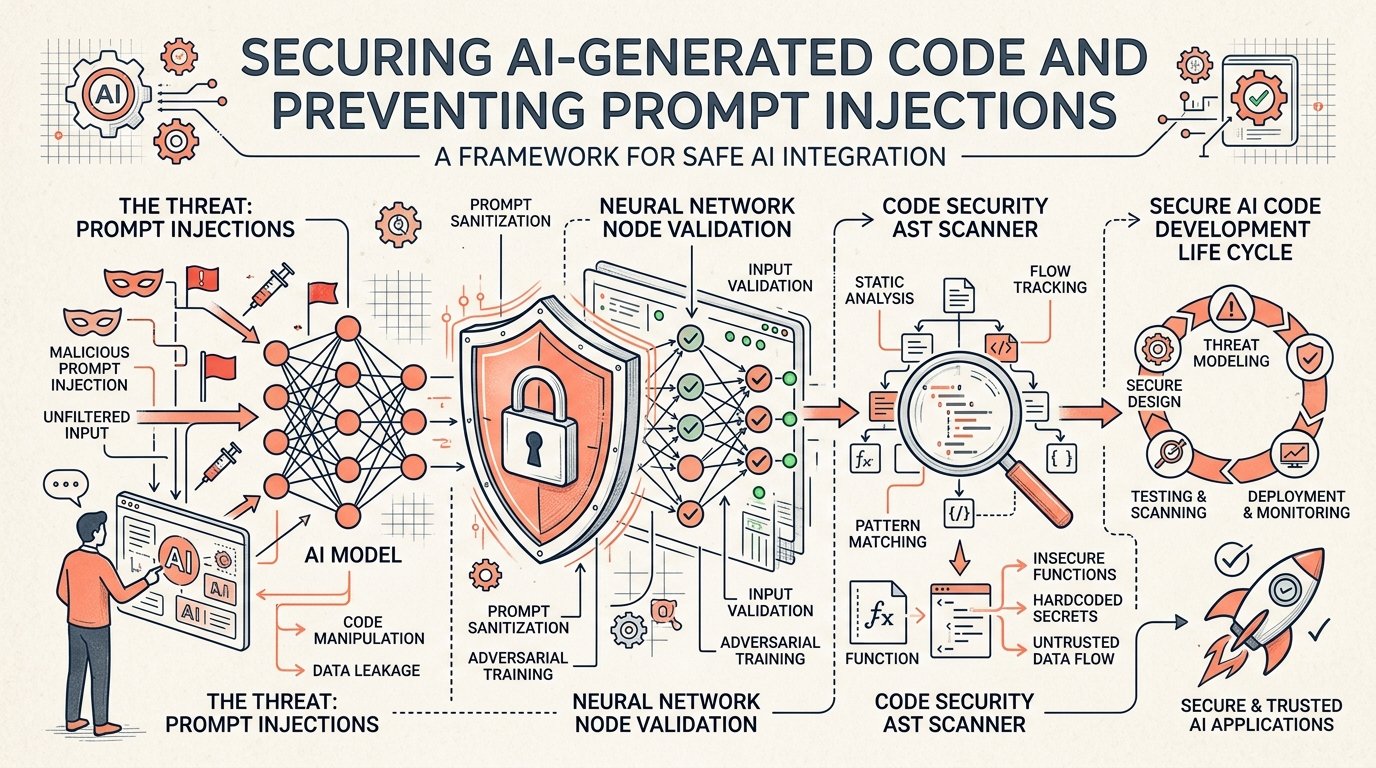
AI-driven coding tools have accelerated development cycles exponentially. However, generative models are trained to produce code that looks syntactically correct, not necessarily code that adheres to strict defensive security postures.
1. The Hidden Risks in AI-Generated Code
Common vulnerabilities frequently introduced by AI code generators include:
- Hallucinated Dependencies: Suggesting NPM packages that do not exist, exposing projects to supply-chain package squatting.
- Unsanitized DOM Manipulation: Inadvertently using
innerHTMLor unescaped template literals leading to Cross-Site Scripting (XSS). Direct unescaped content inject karne se security risks badh jate hain. - Permissive CORS & Headers: Omitting origin validation or enabling overly broad permissions.
2. Enforcing Strict Content Security Policies (CSP)
A robust Content Security Policy acts as the ultimate safety net against unauthorized script execution and data exfiltration:
HTTP Security Header
Content-Security-Policy: default-src 'self';
  script-src 'self' https://www.youtube.com;
  style-src 'self' 'unsafe-inline' https://fonts.googleapis.com;
  font-src 'self' https://fonts.gstatic.com;
  frame-src https://www.youtube.com;
  object-src 'none';
  base-uri 'self';
3. Automated AST Linting & Sanitization Pipelines
Never deploy AI-generated regular expressions or HTML parsers without automated unit testing and AST-level linting rules (such as ESLint security plugins).
🔒 Security Rule: Treat all AI-generated code as untrusted input. Perform systematic code reviews, eliminate framework signature headers, and run automated dependency audits on every commit.