
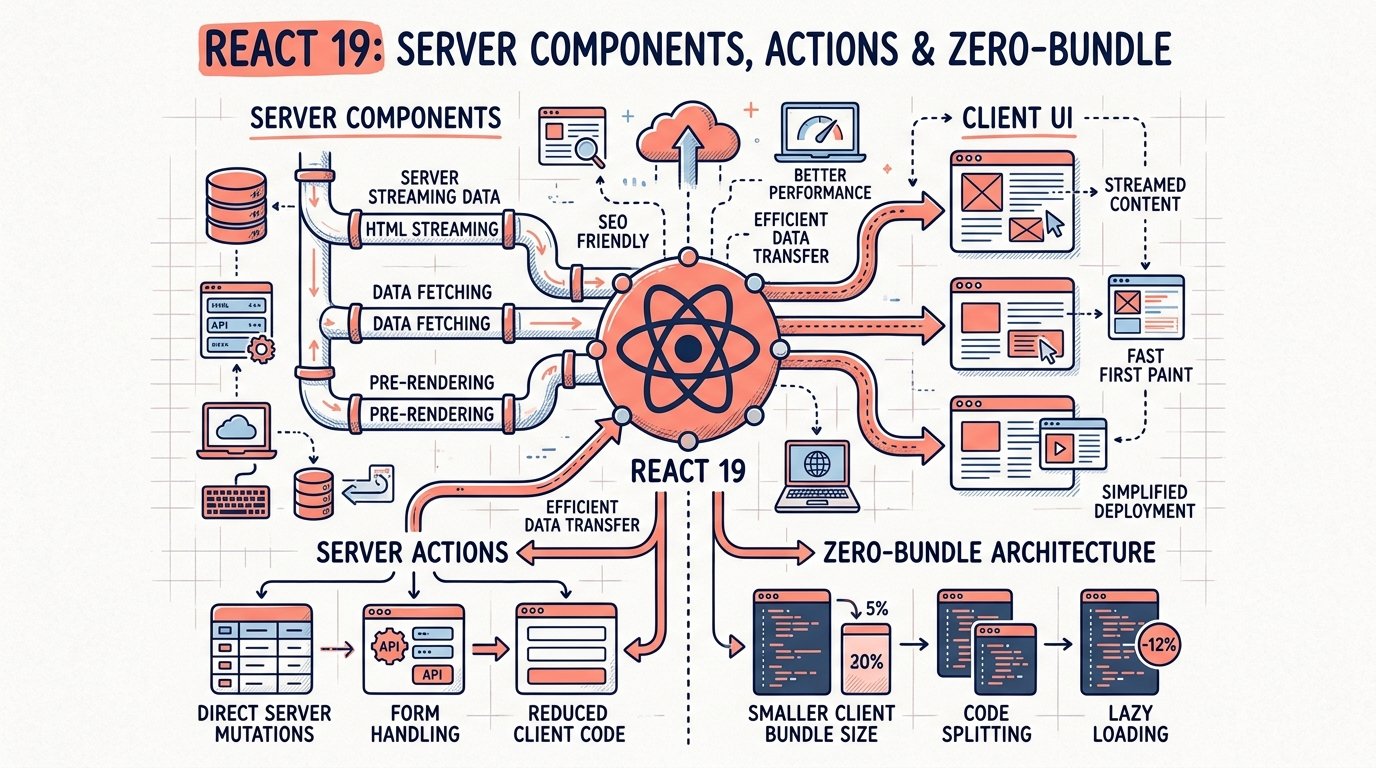
React 19 represents the most monumental shift in React's mental model since the introduction of Hooks. By shifting component execution to the build-time or request-time server environment, developers can build rich UIs with zero client-side JavaScript overhead.
1. The Shift to React Server Components (RSC)
Traditionally, every React component bundled its dependencies, helper libraries (such as date formatters or markdown parsers), and logic into the client JS bundle. Client-side par itna heavy bundle bhejne ki zaroorat nahi hai. With Server Components, these packages stay exclusively on the server:
// Appears on server only — 0 KB shipped to client!
import { db } from "@/lib/db";
import { formatDistanceToNow } from "date-fns";

export default async function ProjectList() {
  const projects = await db.query("SELECT * FROM projects");

  return (
    <div className="project-grid">
      {projects.map((p) => (
        <article key={p.id} className="project-card">
          <h3>{p.name}</h3>
          <span>Updated {formatDistanceToNow(p.updatedAt)}</span>
        </article>
      ))}
    </div>
  );
}
2. Seamless Form Handling with Server Actions & useActionState
React 19 introduces native form actions that execute on the server without requiring manual fetch() API routes, boilerplate state management, or client validation wiring:
"use server";

export async function submitContactForm(prevState, formData) {
  const email = formData.get("email");
  const message = formData.get("message");

  if (!email || !message) {
    return { error: "Please fill in all required fields." };
  }

  await sendNotificationEmail(email, message);
  return { success: true };
}
3. Instant UI Feedback with useOptimistic
To keep applications feeling lightning-fast, React 19 provides useOptimistic to update UI immediately while the server action processes in the background.